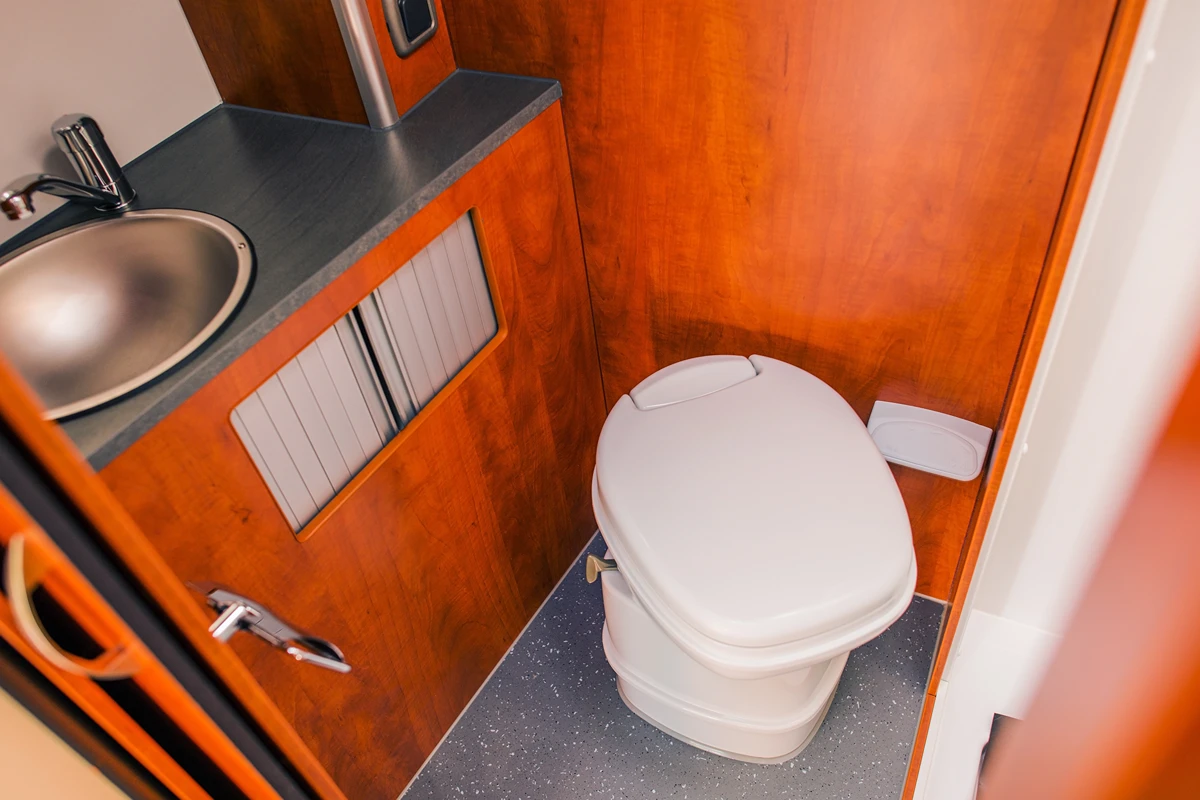
If you’ve been comparing Jabsco vs SEAFLO, you’re not alone. Each brand offers its own range of marine toilets, with different features and price points. Jabsco is a long-established marine brand with a broad range of toilet models and widely available replacement parts.
SEAFLO generally offers lower-priced alternatives aimed at budget-conscious boat owners. The right choice depends on your boat type, usage frequency, and budget. This guide compares both brands to help you choose the right marine toilet for your boat.
A Quick Look at Both Brands
Jabsco has been manufacturing marine pumps and toilets for decades. The brand is widely recognised in the Australian boating market and offers a broad range of marine sanitation products backed by extensive spare parts availability. Jabsco toilets are widely used on recreational boats and can also be found on a range of commercial vessels.
SEAFLO is a newer brand by comparison. The brand has expanded its global presence by offering more affordable pumps, marine toilets, and bilge systems. Both brands manufacture manual and electric marine toilets. The main differences are design, pricing, replacement part availability, and warranty support.
Manual vs Electric Marine Toilets: What’s the Difference?
Before comparing the two brands, it helps to understand the two main types of marine toilets on the market.
Manual marine toilets use a hand pump to flush waste through the system. They have fewer components, making them mechanically simpler and generally easier to service. They’re well-suited to smaller vessels or situations where simplicity and reliability are the priority.
Electric marine toilets use a motorised pump, and many models also include a macerator to process waste. They’re more convenient, especially on larger boats with multiple users. The trade-off is that they typically cost more upfront than manual models, and because they have more components, repairs and replacement parts can also be more expensive over time.
Jabsco vs SEAFLO: Key Differences
Build Quality and Materials
Jabsco toilets are designed for regular marine use and feature corrosion-resistant materials suitable for fresh and saltwater environments. Across its range, the brand uses durable components such as stainless-steel motor shafts and heavy-duty pump assemblies designed for repeated use.
SEAFLO toilets are also built for marine environments and use corrosion-resistant materials, stainless-steel motor shafts, and similar pump designs. The brand focuses on offering comparable functionality at a lower price point.
Spare Parts and Serviceability
Jabsco has a long-established spare parts network in Australia. Genuine service kits, seals, valves, pump assemblies, and other replacement components are widely stocked by marine retailers including Boat Hut, making routine servicing and repairs straightforward.
SEAFLO also offers replacement parts and has distributors supporting warranty claims and spare parts. However, Jabsco’s longer market history means its replacement parts are generally stocked by a wider range of suppliers, which may make them easier to source for some models.
Range and Options
Jabsco offers manual and electric marine toilets in a variety of configurations. Depending on the model, buyers can choose between compact and regular bowl sizes, freshwater or seawater flushing, and 12V or 24V power options. The range also includes Quiet Flush models and electric conversion kits for compatible manual toilets.
SEAFLO also offers manual and electric marine toilets in compact and regular bowl sizes, with freshwater or seawater flushing and both 12V and 24V power options. While the overall product categories are similar, Jabsco’s range includes a wider selection of model variations and upgrade options.
Price
SEAFLO is generally the more affordable option upfront. For boaters working within a tight budget or fitting out a smaller vessel, this is an advantage. The lower initial cost can make it an attractive entry point.
Jabsco products usually cost more upfront, but they can offer value over time. Due to Jabsco’s large spare parts network, finding replacement parts and service kits is easier if your toilet ever needs maintenance.
Warranty and Support
Jabsco products are typically covered by a manufacturer’s warranty and supported through an established network of authorised dealers and service providers in Australia. SEAFLO also offers warranty support through its Australian distributor, although its dealer and service networks are generally less extensive than Jabsco’s.
What To Look For Before You Buy
Before making your decision, consider the following:
- Voltage compatibility: Most electric marine toilets run on either 12V or 24V DC. Check your boat’s electrical system before selecting a model.
- Hose size and connection points: Toilet connections need to match your existing through-hulls and hose diameters. This varies between models and brands.
- Bowl size and mounting footprint: Ensure the toilet will fit the available space and match your existing mounting points.
- Holding tank requirements: Depending on where you boat in Australia, sewage may need to be retained in a holding tank rather than discharged overboard. Check that the toilet is compatible with your holding tank and existing plumbing, and determine whether any additional components, such as discharge or macerator pumps, are needed for your installation.
Making the Right Choice for Your Boat
When it comes down to Jabsco vs SEAFLO, both brands have their place, but they serve different buyers. Jabsco’s long-standing presence in the Australian market, broad product range, and extensive spare parts network make it a solid choice for most applications. SEAFLO offers a more affordable entry point, making it well-suited to budget-conscious buyers and boats that see occasional or moderate use.
Choose Jabsco if you:
- Use your boat regularly.
- Have a larger vessel.
- Prioritise easy servicing and long-term reliability.
- Want readily available replacement parts.
Choose SEAFLO if you:
- Use a smaller boat or only go boating occasionally.
- Are fitting out an older boat on a budget.
- Want a toilet for occasional rather than frequent use.
- Want a more affordable option without paying for premium features.
Before purchasing a toilet, confirm it’s compatible with your boat’s electrical system, plumbing layout, holding tank setup, available installation space, and floor mounting configuration. If you’re looking for pumps, macerators, or other marine plumbing components for your vessel, browse Boat Hut’s Marine Pumps and Plumbing range to find what you need.
Frequently Asked Questions
Is Jabsco better than SEAFLO for marine toilets?
Jabsco generally offers better long-term reliability, parts availability, and serviceability, especially in the Australian market. SEAFLO is a reasonable option for light use or budget installations, but Jabsco has a stronger track record for regular and demanding use.
Are SEAFLO marine toilet parts available in Australia?
Yes. SEAFLO spare parts are available in Australia through the brand’s authorised distributor and selected marine retailers. Jabsco, however, has a more established spare-parts network, with service kits and replacement components stocked by a wider range of Australian marine suppliers.
What is a macerator on a marine toilet?
A macerator is a pump that grinds waste into smaller pieces before it is pumped out of the system. It is typically used in electric marine toilets, allowing waste to be pumped through a thinner hose to a holding tank.
Can I upgrade from a manual to an electric marine toilet?
Yes, in most cases. Some manufacturers offer conversion kits that allow you to upgrade the flushing system without replacing the existing bowl and seat. Before upgrading, check that your boat has the correct DC power supply and that the existing hose connections and through-hull fittings are compatible with the conversion kit or new toilet.
Do I need a holding tank with a marine toilet in Australia?
Australian sewage regulations vary by state. Boats are generally not permitted to discharge sewage overboard while docked in a marina, making a holding tank essential in those situations. Recreational vessels are also commonly required to retain sewage in designated no-discharge zones. Outside these areas, the rules depend on the relevant state or territory and your location.
