
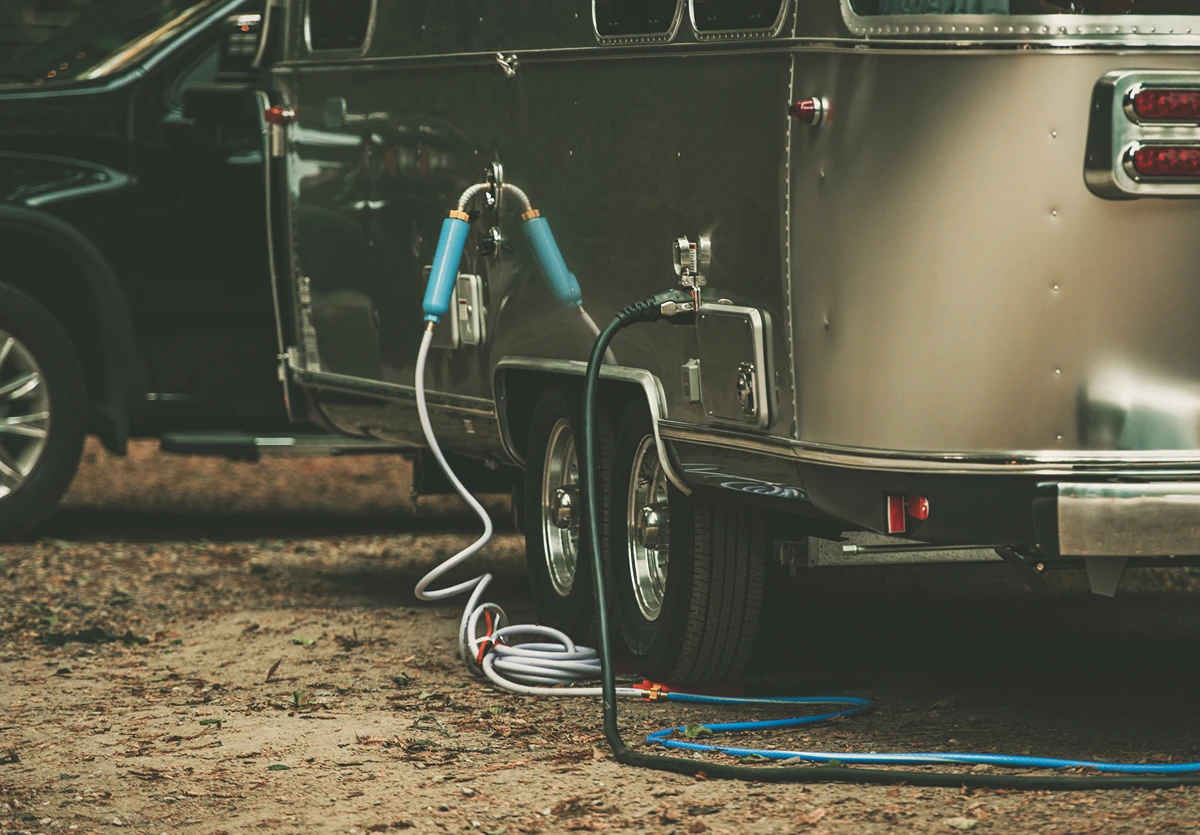
A good water pump is an important part of any caravan water system. Choosing one with the right flow rate and setup can help you get reliable water pressure and keep things working smoothly wherever you travel.
In this buyer’s guide, we’ll explain how a caravan water pump works and look at different types of water pumps for caravan use. We’ll also cover what to consider when choosing a pump for your setup, along with simple maintenance tips.
Understanding RV Water Pumps and Their Types
A caravan water pump moves water from your onboard tank to your taps, shower, and, in some cases, your toilet system. It supplies the pressure needed to move water through the caravan’s plumbing, giving you a steady flow at the tap without relying on the tank being positioned above the outlet.
Here are a few common types of water pumps used in caravans:
Pressure pumps
Pressure pumps switch on automatically when a tap is opened and maintain a set pressure while water is running. These are the standard choice for most caravan plumbing systems. Examples of these pumps include the Whale Watermaster RV On Board Pressure Pump (FP0814) and Jabsco Par Max 3.
Submersible pumps
Submersible pumps sit inside the water tank and push water out through the plumbing. They tend to operate quietly and are a simple option for many caravan water systems. Examples of submersible pumps include the Whale Submersible Pump (GP1352) and Whale Submersible Pump, 16 LPM, 12 Volt (GP1652).
Inline electric pumps
Inline electric pumps are installed in the water line and can be used to boost flow and pressure, including when used with a submersible pump. Examples include the Whale Inline Electric Pump (GP1392), Portable Rule Inline Pump Plus IL280P, and the Whale Inline Electric Pump, 12 Volt, 15.75 LPM (GP1692).
Manual foot pumps
Manual foot pumps don’t rely on electricity and offer a simple backup to an electric pump. An example of a manual foot pump is the Whale Gusher Galley Foot Pump MK3 GP0550.
Each type suits different setups, tank placements, and power arrangements, so it’s important to choose one that fits your caravan.
What Is The Best Caravan Water Pump for Your Setup?
People often ask, “What is the best caravan water pump for my setup?” The answer depends on how the caravan’s water system is set up and what type of pump the system needs. A few factors can help you choose the right one:
- Pump type: Submersible and inline pumps are suited to different caravan water systems, so it is important to choose a pump that is compatible with your existing plumbing.
- Physical space: The space available for the pump can also affect which type is suitable. Submersible pumps need to fit through the tank opening, while inline pumps require suitable space outside the tank.
- Pressure settings: If you are looking for a pressure pump, check the pressure switch settings to make sure they suit your plumbing system.
- Power source: The pump must match your caravan’s electrical system, including its operating voltage and current requirements. Check the pump’s current draw to ensure it is compatible with your caravan’s wiring and available power.
Caring for Your Caravan Water Pump
Regular maintenance helps keep your caravan water pump working properly and can help prevent common issues. Here are a few simple maintenance steps to follow:
- Flush the system after periods of storage, especially if water has been sitting in the tank or plumbing. This helps clear stagnant water before the system is used again.
- Check fittings and hose connections for leaks, as leaks can cause some pressure pumps to continue cycling when the taps are closed.
- Avoid running the pump dry unless it is specifically designed to do so. Some caravan pumps can tolerate running dry, while others may be damaged, so follow the manufacturer’s instructions for your pump.
- Check the pump and plumbing after rough-road travel. Regular travel can expose caravan fittings and plumbing to vibration, so inspect the pump, mounting, and nearby connections for anything that has become loose or damaged.
Final Thoughts
Choosing the right water pump for a caravan depends on its water system, the type of pump mechanism needed and how its plumbing is configured. With the right pump and proper care, you can keep water flowing reliably throughout your travels. Browse Boat Hut’s range of caravan water pumps to find an option for your setup.
Frequently Asked Questions
How do I know what flow rate and pressure my water system requires?
Check your caravan’s manual for the recommended flow rate and pressure for your water system. Most caravan water systems are rated between 30 and 50 PSI. You can also check the specifications of your existing pump to help you choose one that suits your caravan’s requirements.
Can I install a caravan water pump myself?
Yes, you can install a caravan water pump yourself if you are confident working with the caravan’s plumbing and electrical system. Always follow the pump manufacturer’s installation instructions and make sure all connections are secure.
Why is a reliable water pump important?
Your water pump supplies the water you need for everyday use, from washing dishes to showering. Water pressure should be sufficient to maintain a smooth flow of water from taps, showers and other outlets. A pump that cycles on and off too often, or one that’s too small for your plumbing system, can leave you with a weak flow, especially when multiple outlets are in use. If you live in your caravan, it is recommended to carry a spare pump or have a manual pump as a backup.
When should I replace my water pump?
There is no set time when a caravan water pump needs to be replaced. A pump may need replacing when it no longer performs properly, develops a fault, or shows signs of damage or wear. Regular checks and maintenance can help identify problems before the pump stops working.
How do I know if there is a problem with my water pump?
Signs of a problem can include reduced water flow or pressure, unusual or excessive noise, repeated cycling when the taps are closed, leaks, or visible damage or corrosion. These can also be caused by issues elsewhere in the plumbing system, so check both the pump and surrounding connections to identify the cause.
