
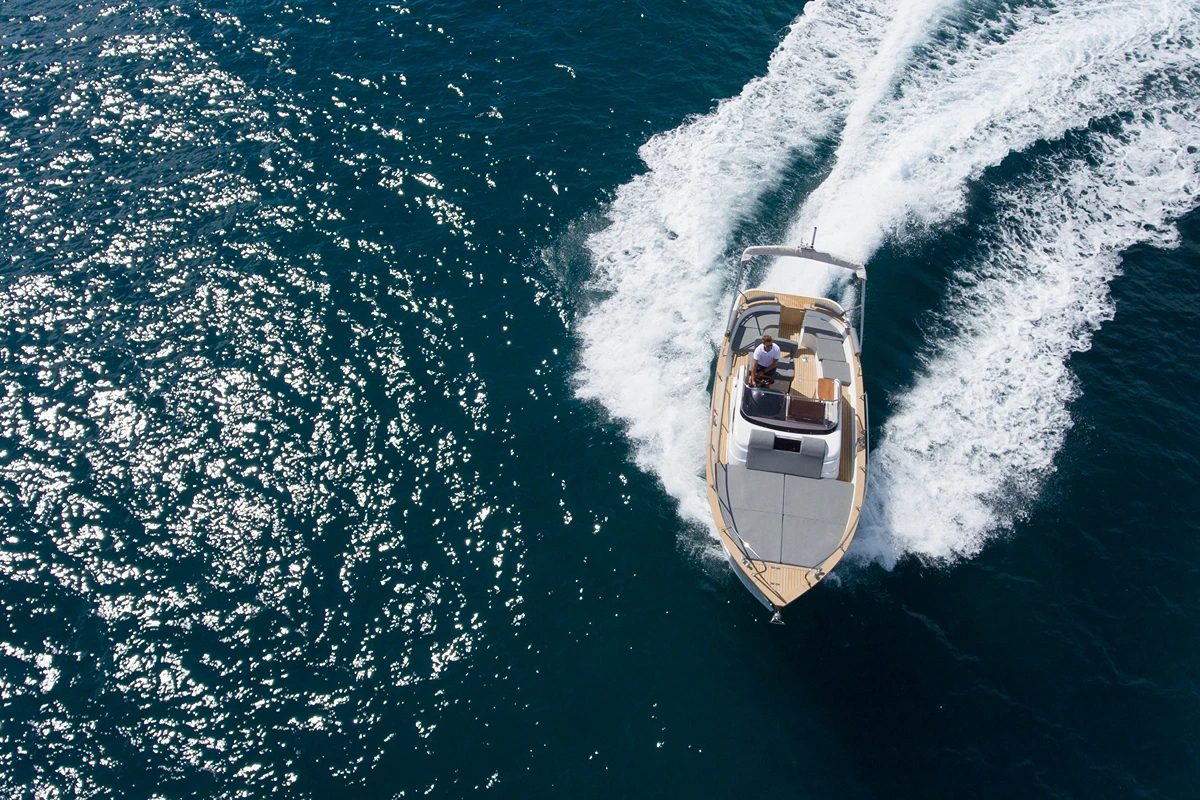
When a boat leans to one side on plane, it can affect more than just comfort. It may also compromise handling, fuel efficiency, and safety. Whether you’re dealing with a persistent list or a lean that only appears at speed, understanding what’s causing it is the first step to fixing it properly. This guide covers the common causes, practical solutions, and how to prevent the problem from happening again.
Why Does a Boat Lean to One Side on Plane?
A boat that leans to one side as it gets up on plane is often running with a list. This usually happens when weight, propeller thrust, or hydrodynamic forces are unevenly distributed across the hull, causing the boat to lean to one side.
Common causes include:
- Uneven weight distribution: Passengers, fuel tanks, gear, or batteries sitting off-centre are among the most common causes.
- Engine or outboard torque: On single-engine boats, the rotating propeller creates torque that can cause the boat to lean or pull slightly to one side, particularly while accelerating or on plane.
- Trim tab issues: Trim tabs that are worn, incorrectly set, or not functioning properly can cause a lean, especially at planing speeds.
- Propeller pitch or damage: A bent or damaged propeller can create uneven thrust, affecting how the boat tracks and rides on plane.
- Hull fouling or damage: Barnacle build-up or damage on one side of the hull creates drag imbalance.
- Hydraulic steering imbalance: Hydraulic or mechanical steering problems can cause the boat to pull to one side, sometimes contributing to an uneven running attitude.
- Fuel load imbalance: Twin-tank setups where one tank is more depleted than the other can noticeably shift the centre of gravity.
How to Fix a Boat That Leans to One Side
Step 1: Check and Redistribute Weight
Walk around the boat and assess how weight is distributed. Move heavy items such as batteries, fuel jerry cans, and fishing gear toward the centreline or to the opposite side of the lean.
If uneven weight distribution is the cause, this simple adjustment may be all that’s needed. On smaller boats, a heavy load placed off-centre can be enough to produce a noticeable lean at speed.
Step 2: Adjust Your Trim Tabs
Trim tabs are flat plates mounted at the stern of the hull. They allow you to level the boat by making small adjustments to its running attitude. They’re among the most useful tools available for correcting a list when planing.
If your boat already has trim tabs, check that they’re functioning correctly, as both tabs should operate smoothly and respond independently to the controls. If one side is stiff, non-responsive, or stuck, it may need servicing or replacement.
If your boat doesn’t have trim tabs, they’re worth considering. They improve handling, reduce lean, and can help the boat get on plane more efficiently. You can view the full range of trim tabs at Boat Hut.
When using trim tabs to correct a lean:
- Adjust one tab at a time.
- Make small adjustments while underway, noting how the boat responds.
- Avoid over-correcting, as excessive tab on one side can create its own handling issues.
Step 3: Inspect the Propeller
A bent or damaged propeller can affect how the boat handles on plane and, in some cases, contribute to the boat leaning or pulling to one side. Inspect the propeller for bent blades, chips, cracks, or other visible damage.
If you notice any of these issues or the propeller appears to wobble when turned by hand, have it inspected by a qualified marine mechanic. Attempting to straighten a bent blade without the right tools often makes things worse.
Step 4: Check Outboard or Stern Drive Alignment
The engine’s alignment and trim affect how thrust is applied to the boat. An outboard that’s mounted off-centre or trimmed incorrectly can cause the boat to pull or run unevenly on plane. Check that the engine is mounted squarely on the transom and that the tilt and trim settings are appropriate for your hull.
Propeller torque is the rotational force produced by a spinning propeller and is a known cause of lean in single-engine boats. Propeller torque can create a slight tendency for a single-engine boat to lean or pull to one side, particularly during acceleration or while on plane.
Step 5: Review Your Steering System
In some situations, a faulty steering system can cause the boat to pull to one side or require constant steering correction. Hydraulic steering systems with air in the lines, low fluid levels, or worn components can cause inconsistent feedback and tracking problems.
If the boat steers straight but still leans, the steering system may not be the primary cause. But if there’s pulling combined with leaning, it’s worth having the system checked. Boat Hut stocks a range of hydraulic steering components for replacement or upgrade.
Step 6: Check the Hull
Inspect the underside of the hull for barnacle build-up, particularly on one side. Localised fouling creates extra drag that can cause the boat to track unevenly and, in some cases, contribute to leaning while on plane. Antifouling paint and regular hull cleaning help prevent this.
Also, inspect the hull for signs of structural damage. A hull that is damaged or has been repaired poorly may sit unevenly in the water.
Can You Fix a Boat Lean Yourself?
In many cases, yes, provided that the lean isn’t severe and that the cause has been clearly identified. Redistributing weight, adjusting trim tabs, and cleaning the hull are all tasks a boat owner can undertake with basic knowledge and care.
Professional help is advisable when:
- The lean is persistent or becoming more pronounced.
- There’s visible hull damage.
- The propeller is bent or damaged.
- Steering components need replacing.
- The issue persists after all the standard checks.
A mild lean caused by uneven loading or normal operating conditions can often be corrected by redistributing weight or making small trim tab adjustments. If you notice a sharp, persistent list at rest or at speed, have it checked by a marine mechanic before you continue using it.
Common Mistakes to Avoid
- Ignoring the lean and compensating with steering: Doing so masks the underlying problem and can make the boat harder to control.
- Overloading one trim tab: Dropping one tab too far to compensate for a severe lean adds drag and reduces performance. The underlying cause still needs addressing
- Assuming the propeller is the issue, without testing: Inspect the propeller and rule out simpler causes such as uneven loading or trim settings before replacing it.
- Neglecting trim tab maintenance: Salt and corrosion build up on actuators over time. Regular inspection prevents tabs from seizing in position
- Adding ballast weight without checking for hull issues: If the lean is caused by water ingress or hull damage, adding weight to the opposite side only masks the problem and increases the boat’s overall load.
Tips for Long-Term Prevention
Maintaining a balanced boat isn’t a one-time fix; it requires periodic attention:
- Store gear centrally or alternate sides between trips.
- Check trim tab actuators and hinges regularly, and rinse with fresh water after saltwater use.
- Keep an eye on your battery weights and positions as you upgrade or replace units.
- Have your hull inspected if you notice a sudden change in how the boat rides or handles.
- Monitor hydraulic steering fluid levels and condition as part of regular servicing.
Key Takeaway
When a boat leans to one side on plane, it is worth taking seriously, not because it’s always dangerous, but because it usually signals something that can be improved. In many cases, the cause comes down to uneven weight distribution, trim tab adjustment, propeller condition, engine setup, or hull condition.
Working through the checks in order, starting with the simplest, helps rule out the most common causes first. When the lean is minor and the cause is clear, fixing it yourself is a reasonable approach. When the cause isn’t obvious or the leaning persists, have the boat inspected by a qualified marine mechanic.
Boat Hut stocks a variety of boat maintenance and repair products to help keep your boat in top condition. From propeller replacements to hull cleaners, we have everything you need to ensure smooth sailing on every trip.
